
The loop is not a metaphor but a process
Every separation stage decides whether a material becomes a raw material again or ends up in incineration. What that means in energy and CO₂ can be calculated.
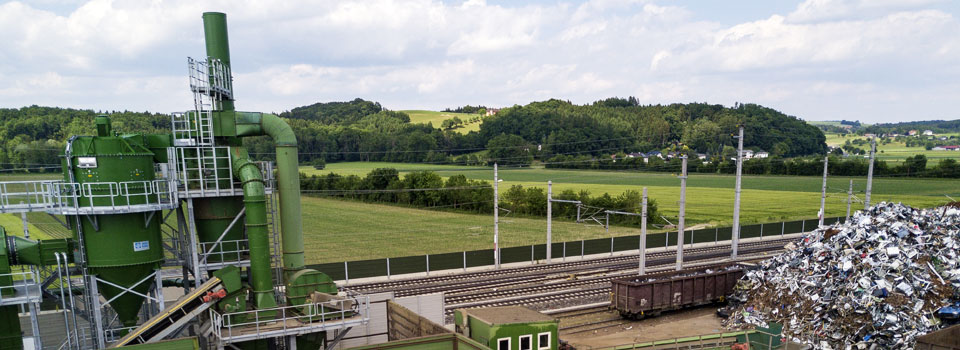
The loop
Where we sit in the loop
Five stations, two of which we run ourselves. The other three also determine how much actually comes back.
- 01 Production. An appliance or vehicle is made — from primary or secondary raw materials.
- 02 Use. Ten to thirty years in service, depending on the product.
- 03 Collection. Take-back systems, businesses and our own fleet bring the material in.
- 04 Processing. Depollution, shredding, non-ferrous separation, plastics processing — this is where depth of recycling happens.
- 05 Secondary raw material. Iron, aluminium, copper, stainless steel and polymers go back into production.
Impact
What comes of it
850,000 t
metals and plastics we process every year
1,000,000 t
CO₂ emissions avoided — the annual emissions of a city of around 130,000 people
20,000 t
recycled plastics per year at MGG Polymers
Tell us what you have.
Whether you are delivering material, buying secondary raw materials or need a disposal route for an entire plant — send us the details. We usually reply the same working day.